
Five inches of rain a month, no bare dirt
Wet-Season Erosion Control in Portland, OR
Slope stabilization that keeps soil on hillside lots and job sites from November through March.
- No-cost site visit, then a quote in writing
- Seeding planned around the Willamette Valley rain calendar
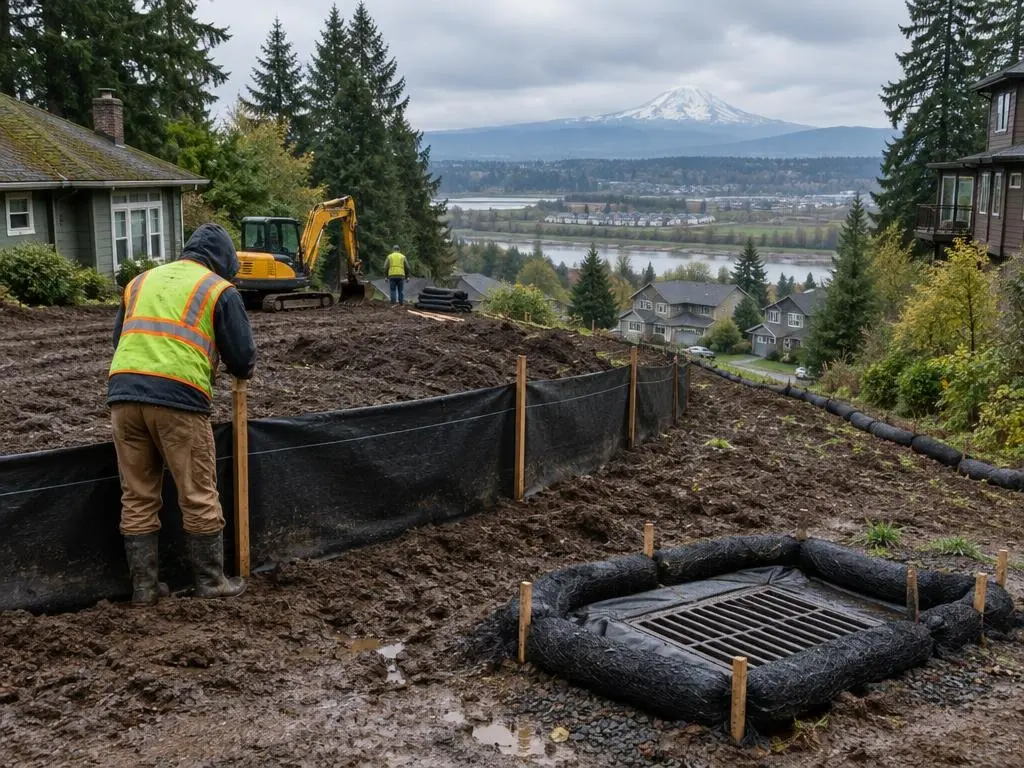
- Silt fence and stabilization installed to your approved erosion plan
Why Bare Ground Does Not Last Here
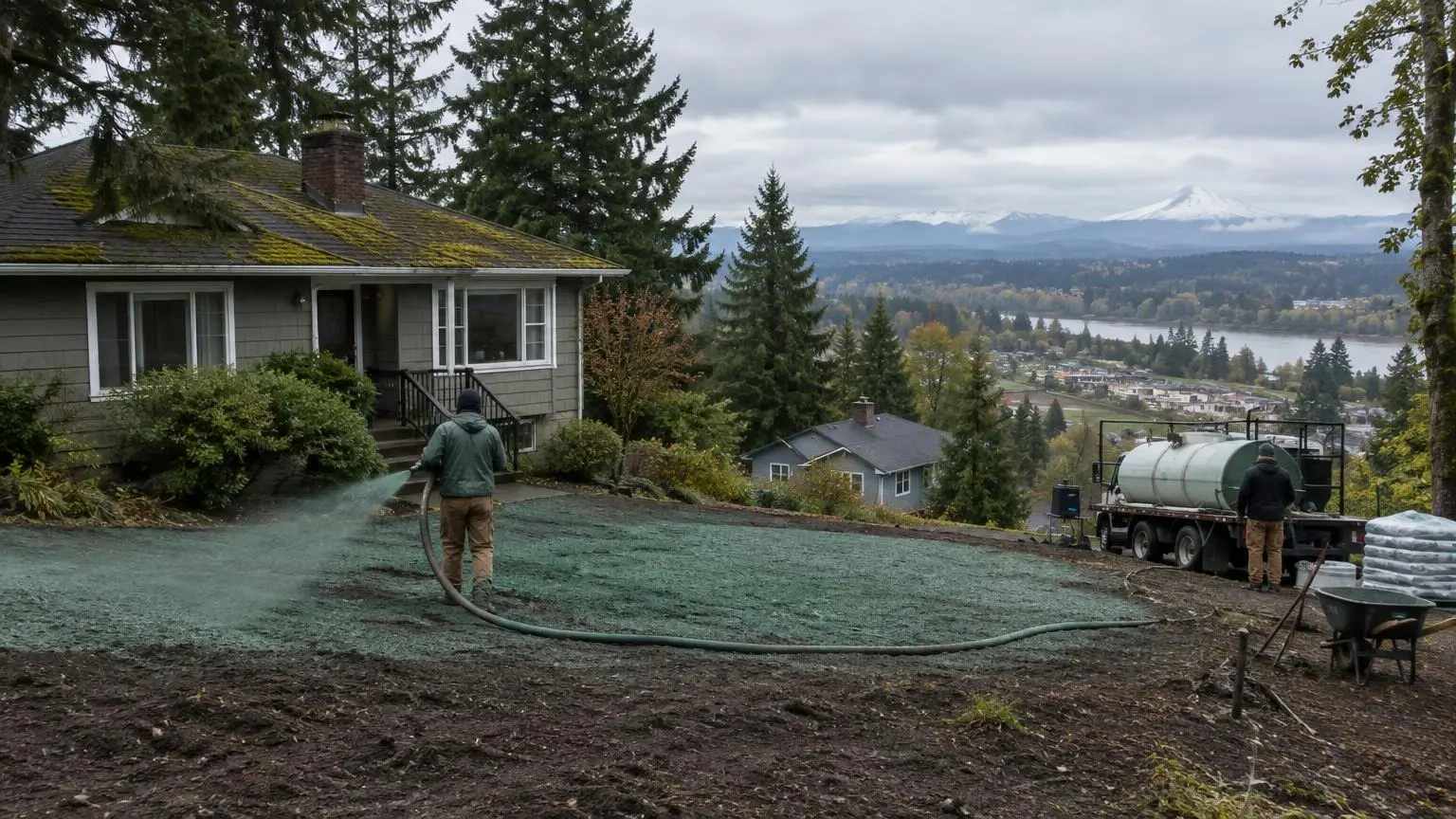
Wet-season erosion control in Portland is about the months when it hardly stops raining. From November through January the airport averages more than five inches of precipitation a month, and rain often falls as days of steady drizzle, contributing to about 157 days a year with measurable precipitation. A slope that looked stable in September can lose its surface by Thanksgiving. As erosion control contractors we work for hillside homes, builders and public projects: hydromulch, bonded fiber matrix, erosion control blankets, wattles and seed, chosen for the grade and the time of year.
Matching the cover to the slope
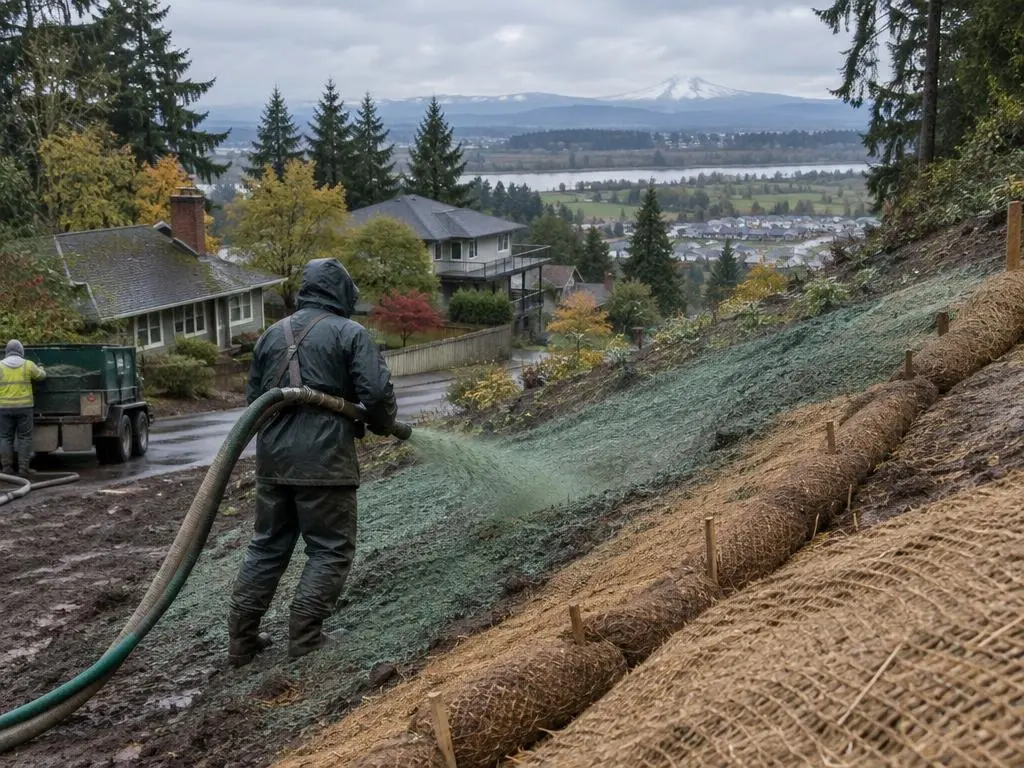
On gentle ground, a standard wood or paper fiber hydromulch with tackifier, sprayed with seed, gives enough protection while grass establishes. As slopes steepen, the mulch has to bond tighter. A bonded fiber matrix forms a continuous crust over the soil and resists raindrop impact without needing the seed to root first. On the steepest cuts, banks along drainageways and swales that carry concentrated flow, we pin blankets over the seeded soil: straw alone, a straw and coconut fiber blend, or 100 percent coir.
Hillside lots
The West Hills, the buttes in the east county and the bluffs along the rivers are where we do most slope stabilization. Portland's own rules recognize the risk: in environmental zones within the Balch Creek and Forest Park subdistricts of the Northwest Hills plan district, ground-disturbing activity is not allowed at all from October 1 to April 30. Elsewhere, hillside work that runs into fall needs a cover plan ready before the rain.
Swales, ditches and channels
Water that concentrates in a swale or roadside ditch cuts a groove faster than sheet flow ever will. Hydromulch alone usually washes out of a flowing channel. We line swales and ditches with blankets stapled in check slots and seeded underneath, or with turf reinforcement where the design calls for it, and seed with a mix that tolerates both standing water in winter and drought in August.
Wattles and slope length
Long uninterrupted slopes build up runoff speed. Straw wattles, trenched and staked across the slope on contour, break that length into shorter sections and trap the sediment that does move. We usually combine them with hydromulch or blankets rather than relying on wattles alone.
Timing matters as much as material
The ideal is to seed a slope in late summer so roots are established before November. Grass seeded in late August or early September has weeks of warm soil ahead of it, while grass sprayed in December may sit dormant until spring. When work finishes late, we use heavier hydro mulching or blankets for the winter and come back to overseed thin spots in spring.
Pricing
Erosion control is priced by area and material. Mulch and blanket rows in the table come from a DOT unit-rate sheet (2025), and the slope surcharge comes from a published residential hydroseeding guide. Once you sign off on our written figure, that number holds and nothing gets tacked on later. Get a free estimate
Erosion Control Options
From light mulch on a gentle grade to blankets in a ditch.
Hydromulch with tackifier
Wood or paper fiber mulch sprayed with seed for gentle to moderate slopes.
Bonded fiber matrix
A heavier, bonded mulch layer for steep cuts and winter cover where seed will be slow.
Straw erosion control blankets
Pinned straw mats for short-term protection on steep or exposed slopes.
Straw-coconut and coir blankets
Longer-lasting blankets for swales, ditches, channels and creek-side banks.
Straw wattles
Trenched and staked on contour to shorten slope runs and catch sediment.
Slope and swale seeding
Seed mixes suited to wet winters and dry summers on banks and drainageways.
Typical Erosion Control Costs
| Item | Published figure |
|---|---|
| DOT unit-rate sheet (2025): hydraulic mulch, wood fiber, per 1,000 square feet | $98 |
| Same sheet: 70/30 straw-coconut blanket supplied and pinned, per 1,000 square feet | $468 |
| Same sheet: coir blanket supplied and pinned, per 1,000 square feet | $532 |
| Same sheet: hand-spread straw mulch, per 1,000 square feet | $170 |
| Extra charge for hydroseeding a steep yard (HomeGuide) | $0.05 to $0.10 extra per sq ft |
Rate schedule figures are agency reference rates, not Portland quotes. Bonded fiber matrix gets quoted once we have seen the slope. Ballpark only. A written, itemized number follows the site visit.
How We Stabilize a Slope
1. Read the slope
We look at steepness, length, soil, where water enters and where it leaves.
2. Fix the water first
Downspouts, sheet flow and concentrated runoff are redirected or slowed before cover goes on.
3. Prepare and seed
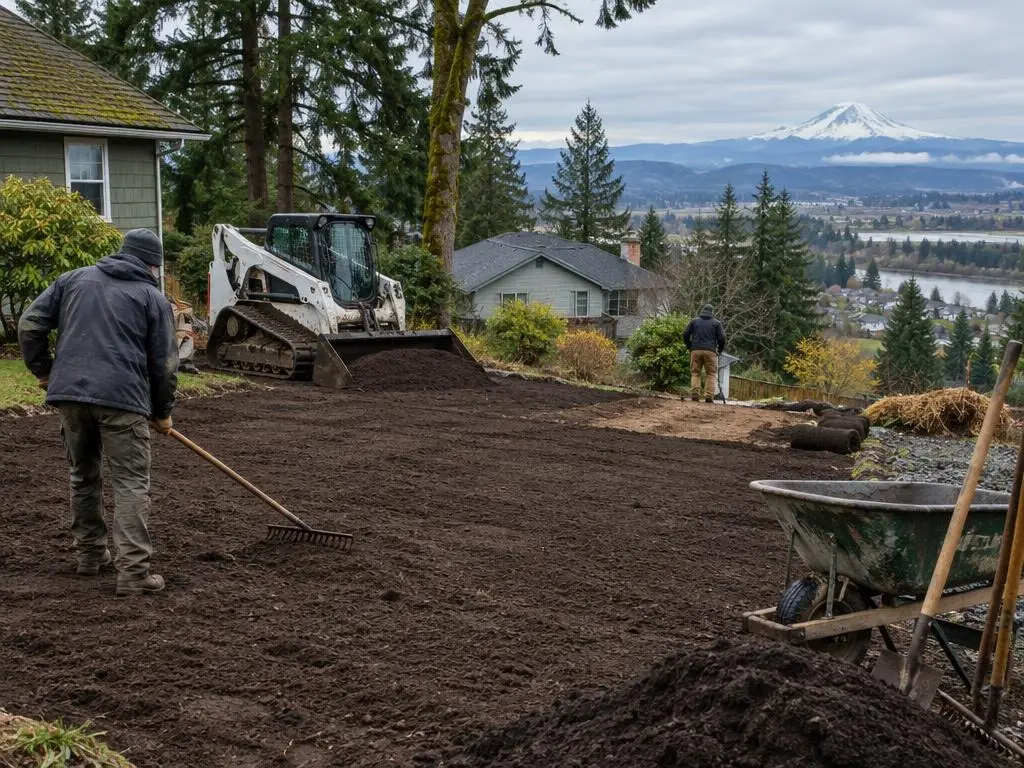
The surface is roughened across the slope and seeded so roots can grip.
4. Apply the cover
Hydromulch, bonded fiber matrix or blankets go on, with wattles on long runs.
5. Check after storms
Rills or slumps are repaired early before they grow.
Why Choose Us for Wet-Season Erosion Control
Cover picked for the grade
We do not sell one product for every slope; the material follows the steepness and the season.
Engineer plans respected
On slide-prone or engineered slopes we install what the design calls for.
Late-season options
When work ends in November, we use cover that protects without needing seed to grow first.
Wet-Season Erosion Control Questions
How is BFM different from ordinary hydromulch?
Hydromulch is loose fiber held with tackifier; it suits gentler slopes. Bonded fiber matrix uses more binder and forms a continuous layer that resists heavy rain on steeper ground.
When do I need erosion control blankets instead?
On steep cuts, long slopes, and any swale or ditch carrying concentrated flow. Blankets resist running water better than sprayed mulch.
Can you stop a hillside from sliding?
Surface cover stops soil from washing off; it does not fix a deep slide. Deep instability needs a geotechnical engineer, and we install the surface protection their plan calls for.
Is it too late to seed a slope in November?
For a full stand, usually yes. We put down protective cover now and overseed thin areas in spring.
Do blankets have to be removed later?
No. Straw and coir rot away gradually while the grass roots through them, so we normally leave them where they are.
Wet-Season Erosion Control Service Areas
- Hydroseeding in Portland, OR
- Hydroseeding in Gresham, OR
- Hydroseeding in Hillsboro, OR
- Hydroseeding in Beaverton, OR
- Hydroseeding in Happy Valley, OR
- Hydroseeding in Tigard, OR
- Hydroseeding in Lake Oswego, OR
- Hydroseeding in West Linn, OR
- Hydroseeding in Oregon City, OR
- Hydroseeding in Tualatin, OR
- Hydroseeding in Sherwood, OR
- Hydroseeding in Wilsonville, OR
- Hydroseeding in Milwaukie, OR
- Hydroseeding in Troutdale, OR
- Hydroseeding in Fairview, OR
- Hydroseeding in Camas, WA
- Hydroseeding in Washougal, WA
- Hydroseeding in Battle Ground, WA
- Hydroseeding in Ridgefield, WA
- Hydroseeding in Vancouver, WA
- Hydroseeding in Canby, OR
- Hydroseeding in Forest Grove, OR
- Hydroseeding in Cornelius, OR
- Hydroseeding in Sandy, OR
Get a Wet-Season Erosion Control Estimate
Free slope assessments across the Portland hills.