
Around a 405-acre lake
Hydroseeding in Lake Oswego, OR
A city built around Oswego Lake, where sediment from a yard can end up in the water.
- No-cost site visit, then a quote in writing
- Seeding planned around the Willamette Valley rain calendar
- Silt fence and stabilization installed to your approved erosion plan
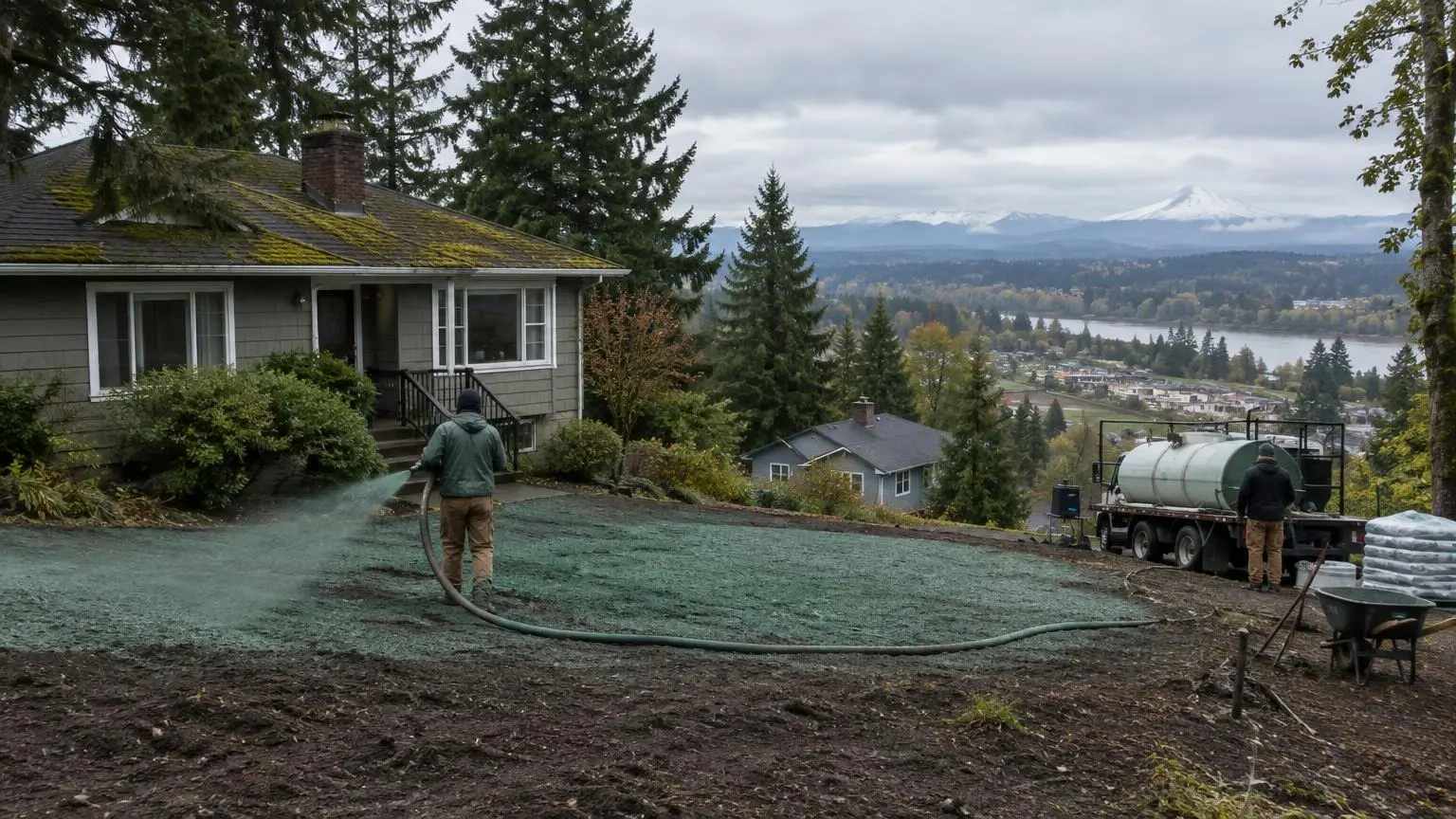
Keeping Soil Out of Oswego Lake
Hydroseeding in Lake Oswego often comes with one extra question: where does the runoff go? The city surrounds 405-acre Oswego Lake, which the Clackamas called Waluga, or wild swan. The lake has been expanded and is managed by the Lake Oswego Corporation; a canal from the Tualatin River dug in 1872 feeds it, and it drains through a dam into Oswego Creek and on to the Willamette.
Lakefront banks
Every three years the lake is lowered several feet so owners can repair docks and boathouses. That work disturbs the bank, and bare shoreline soil goes straight into the water once the level comes back up. After repairs like that we can seed the upper bank with a tackified mulch or a blanket, depending on the slope.
Hillside lots
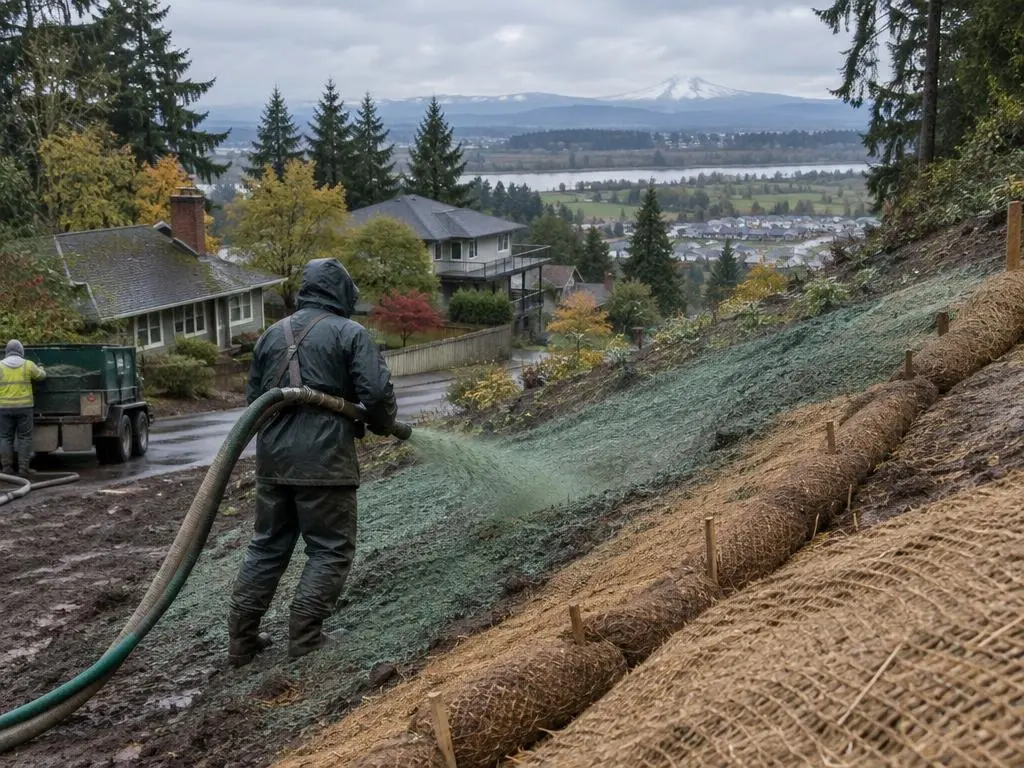
Grading for an addition or a new driveway on a sloped lot leaves cut banks that need cover before the rainy season. We use bonded fiber matrix on steep cuts and silt fence below them.
Tryon Creek and Oswego Creek
Tryon Creek flows out to the Willamette, and Oswego Creek carries the lake's outflow. Lots that drain toward either get sediment control on the downhill side while new grass establishes.
Land sold off by the iron company
Lake Oswego was the hub of Oregon's iron industry in the late 1800s. Afterward the Oregon Iron and Steel Company sold large tracts of its 24,000 acres for development, and developer Paul Murphy promoted the area as a place to live where you play. Many older yards date from those decades and benefit more from renovation and overseeding than full replacement.
Get a free estimate or call (971) 588-2069 about a lakefront, creek or hillside yard.
Lake Oswego Water and Land
- Oswego Lake. The lake covers 405 acres; its main canal from the Tualatin River was dug in 1872.
- Drawdowns. The lake is lowered several feet every three years for dock and boathouse repairs; in 2010 it dropped about 24 ft.
- Iron company land. The Oregon Iron and Steel Company sold large tracts of its 24,000 acres for land development.
Lake Oswego Questions
We repaired our dock during the drawdown. Should we seed the bank?
Yes, before the water comes back up if you can. A mulch with tackifier or a blanket keeps soil from washing into the lake.
Our hillside yard has a steep cut from a new driveway. What holds best?
Pinned blankets or a sprayed bonded fiber matrix, with silt fence below until the grass takes hold.
Do I need to replace my whole older lawn?
Often not. Aerating and overseeding or a partial renovation brings many older Lake Oswego lawns back.
Can you work near Tryon Creek?
Yes. We keep sediment controls between the work and the creek and seed the bare areas promptly.
Free Estimates in Lake Oswego, OR
Site visits around the lake and in the hills of Lake Oswego.
Hydroseeding Near Lake Oswego
- Hydroseeding in Portland, OR
- Hydroseeding in Gresham, OR
- Hydroseeding in Hillsboro, OR
- Hydroseeding in Beaverton, OR
- Hydroseeding in Happy Valley, OR
- Hydroseeding in Tigard, OR
- Hydroseeding in West Linn, OR
- Hydroseeding in Oregon City, OR
- Hydroseeding in Tualatin, OR
- Hydroseeding in Sherwood, OR
- Hydroseeding in Wilsonville, OR
- Hydroseeding in Milwaukie, OR
- Hydroseeding in Troutdale, OR
- Hydroseeding in Fairview, OR
- Hydroseeding in Camas, WA
- Hydroseeding in Washougal, WA
- Hydroseeding in Battle Ground, WA
- Hydroseeding in Ridgefield, WA
- Hydroseeding in Vancouver, WA
- Hydroseeding in Canby, OR
- Hydroseeding in Forest Grove, OR
- Hydroseeding in Cornelius, OR
- Hydroseeding in Sandy, OR